Post-Trip Cleaning After Bugs, Rain, and Highway Miles
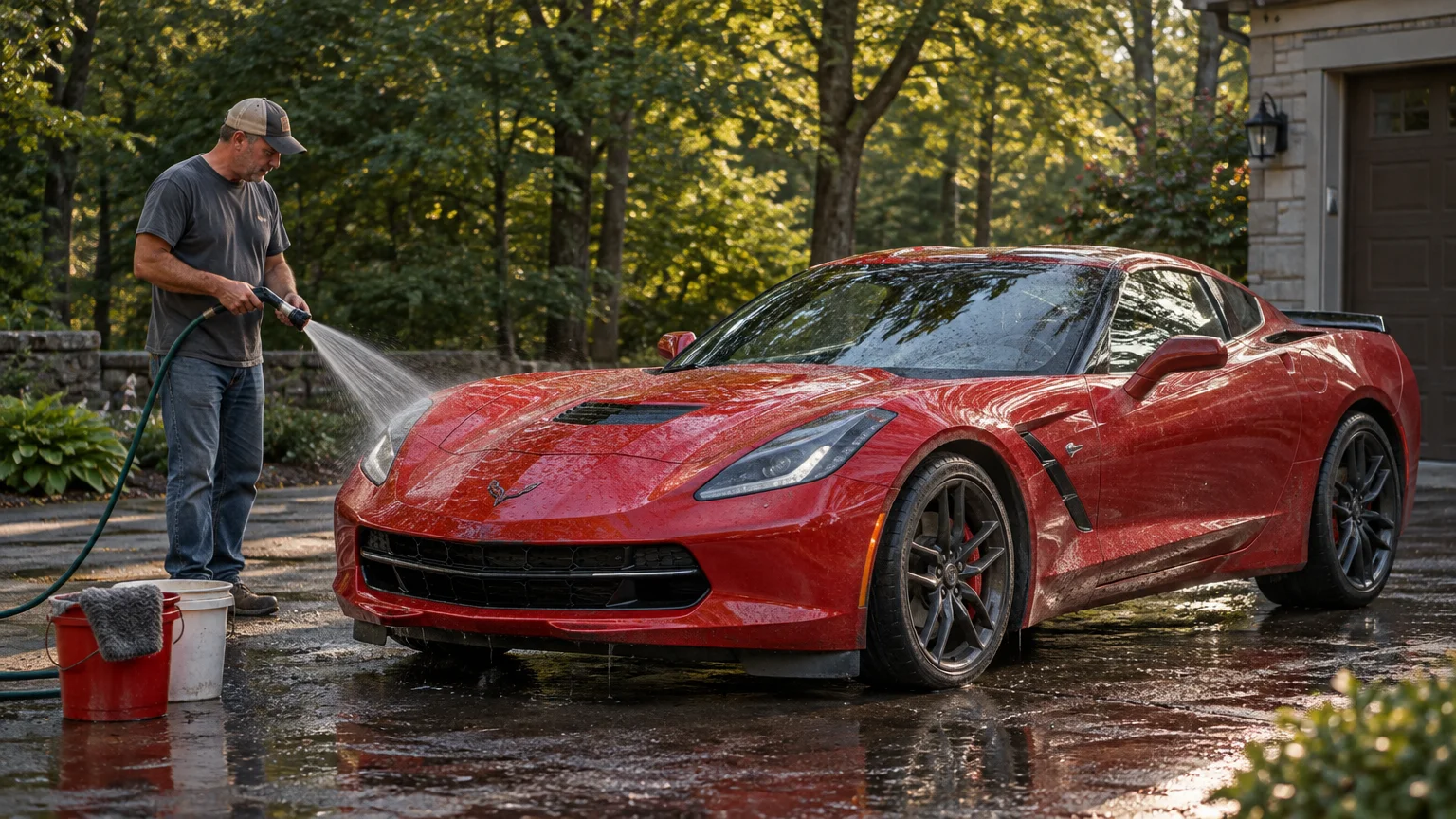
A Corvette road trip cleanup should begin with patience, not aggressive scrubbing. Let the car cool, inspect the nose and lower panels, rinse away loose dirt, soften the bug residue, and then wash from the cleanest areas toward the dirtiest. Give the wheels, wheel wells, grilles, glass, interior, and door jambs their own attention. If the trip involved winter-treated Pennsylvania roads, cleaning the underside becomes a priority rather than an optional finishing touch.
That routine works whether the Corvette has returned from an afternoon along the Delaware, a club run into the Poconos, or several highway days with luggage behind the seats. The goal is not to make every driven Corvette look like a museum piece. It is to remove harmful contamination without creating scratches, staining trim, or erasing the honest details that belong to an older car.
Start with a cool car and a five-minute inspection
Park in shade and allow hot bodywork, wheels, and brakes to cool. Cleaning solution can dry too quickly on a warm panel, while recently driven wheels and brakes deserve time to shed heat before they meet water. Remove luggage first so you can check the cargo area for damp clothing, spilled drinks, leaves, and grit.
Walk around the car before reaching for a wash mitt. Look for heavy bug deposits on the bumper and mirror caps, tar or road film along the rocker panels, packed debris in grilles, brake dust on the wheels, and standing water around weather seals. Check for fresh chips or loose trim as well. Cleaning is easier when you know which areas need soaking and which ones require a gentle hand.
Owners of newer cars should consult the manual for their model year and equipment. Chevrolet’s 2021 Corvette guidance, for example, identifies road salt, calcium chloride, tar, tree sap, bird droppings, and industrial chemicals as contaminants that should be washed off promptly. It also calls for thorough rinsing before and after washing. Those instructions are useful context, but details involving pressure washers, automatic washes, convertible tops, stripes, and underhood components can vary by generation and configuration. Read the applicable Chevrolet owner’s manual rather than assuming one Corvette’s limits apply to every other Corvette.
Rinse before touching the paint
The first rinse carries away loose grit that might otherwise move across the finish under a mitt or towel. Work methodically from the roof and glass downward, giving extra attention to the rear bodywork, wheel openings, lower doors, and rocker areas. Keep a pressure-washer nozzle at a conservative distance, use a broad spray, and never aim concentrated pressure at decals, damaged paint, seals, grilles, cameras, or delicate trim.
The cited 2021 manual warns that washing too close to the body can damage paint and decals. It also places specific conditions on pressure-washer use and warns against power-washing marked underhood components. If the car has historic club decals, old pinstriping, lifting graphics, or aged paint repairs, ordinary low-pressure water and hand cleaning provide more control.
Soften bugs instead of grinding them away
Highway bugs collect most heavily on the front fascia, headlights, mirrors, windshield, and leading edges. After the initial rinse, place a wet, clean microfiber towel over stubborn deposits for a short soak. The moisture loosens the residue so it can be lifted with light passes rather than force.
Use a car-wash product suitable for the surfaces on your particular Corvette. Work a small area at a time with a clean microfiber mitt or towel, then rinse before the solution dries. If residue remains, repeat the soak instead of applying more pressure. A second gentle pass costs less time than correcting fine scratches across a dark hood or painted nose.
Treat stripes, emblems, lamps, decals, and mesh as separate surfaces. Chevrolet’s 2021 guidance specifies lukewarm or cold water, a soft cloth, and car-wash soap for these areas. It says low-gloss black stripes should receive soap-and-water cleaning only, and that rear and hood mesh grilles should be kept clear of debris.
Wash in sections with separate tools for dirty areas
After the bugs have softened, wash the upper body first and leave the rocker panels, rear valance, wheels, and exhaust area until later. Rinse the mitt frequently. A second mitt or towel reserved for lower panels helps keep gritty road film away from the hood and fenders.
- Wash the roof, glass, hood, upper fenders, doors, and rear deck.
- Move to the front fascia and mirrors after the bug residue has softened.
- Clean lower doors, rocker panels, wheel openings, and the rear valance with a separate mitt.
- Use wheel-specific tools that never return to the painted body.
- Rinse the entire car thoroughly so soap does not dry in seams, grilles, badges, or trim.
Strong household soap, abrasive cleaner, and an aggressive brush have no useful role in routine paint care. Chevrolet also cautions against strong chemicals and abrasive products on wheels and wheel trim. Choose mild products intended for automotive use, and confirm that any specialized cleaner suits the wheel finish before applying it broadly.
Give wheels, wells, and lower panels extra time
Long highway miles leave a concentrated mix of brake dust and road grime around the wheels and lower body. Clean one wheel at a time so the product remains wet and controlled. Use soft tools around spokes, lug recesses, and painted or polished surfaces. Avoid dragging a wheel towel over the body afterward.
Rinse the wheel wells and accessible lower areas without directing high pressure into electrical connections, vents, seals, or underhood spaces. Inspect the front grilles and radiator openings from outside and remove loose leaves or insects gently. Corvette cooling openings are not invitations to push a brush through delicate components.
This is also a useful time to look at tire tread for embedded debris and inspect the sidewalls for visible damage. A cleanup does not replace a mechanical inspection, but washing often reveals a nail, cut, leak, or loose fastener that went unnoticed at the fuel stop. Before the next long drive, work through the broader Corvette road trip checklist rather than treating clean paint as proof that the whole car is ready.
Treat Pennsylvania salt as a separate cleanup problem
Rainwater and ordinary summer road film are one thing; winter-treatment residue is another. PennDOT’s winter-operations guidance explains that the agency uses salt, salt brine, and anti-skid material, with the mix changing according to road temperature, precipitation, traffic, and road type. PennDOT identifies road salt as corrosive to vehicle metal and recommends regularly washing accumulated salt and chemicals from the undercarriage, brakes, and wheel wells.
Salt can remain in seams and sheltered areas after the upper body looks clean. Follow the rinse with a short visual inspection for trapped grit and residue. If the car is heading into seasonal storage, complete this cleaning before it settles into the garage; the related Pennsylvania Corvette winter-storage guide covers moisture, tires, battery care, and spring startup.
Dry the details that hold water
Dry with clean, soft towels using light contact rather than heavy rubbing. The 2021 manual specifies a soft, clean chamois or all-cotton towel to reduce scratches and water spotting. Many owners use clean automotive microfiber towels, but the important habits remain the same: keep drying material free of grit, replace a dropped towel, and avoid grinding across the finish.
Open the doors, hatch, and other accessible panels to dry jambs and weather seals. Blot around badges, lamps, mirrors, fuel-door edges, and grille openings where water tends to reappear. Take care around older labels and reproduction decals. Do not chase every droplet with compressed air unless you can control the pressure and keep the tool from striking the paint.
For a convertible, follow the top-care directions in its model-year manual. Chevrolet’s 2021 guidance says the top should be completely dry before it is lowered and should not remain lowered for extended periods.
Reset the cabin without soaking it
Road-trip interiors usually need removal more than restoration: take out receipts, food wrappers, damp mats, and grit before reaching for chemicals. Vacuum carefully around seat tracks and cargo-area edges. Wipe interior glass with a damp microfiber cloth, then clean other materials according to the owner’s manual and product label.
Chevrolet’s 2022 Corvette guidance cautions against saturating upholstery, using stiff brushes or sharp objects, applying solvents or harsh soaps, and rubbing aggressively. That restraint is especially sensible around perforated seating surfaces, screens, switches, contrast stitching, and older trim.
Preserve the car, not just the shine
Post-trip cleaning is also a chance to document the Corvette’s condition. Photograph a new chip before touching it up, note a developing seal issue, and record any damage to an old decal or stripe. The National Corvette Museum’s preservation perspective emphasizes caring for a vehicle’s materials, modifications, and history rather than simply making it visually pristine. That idea matters when a car retains original paint, aged trim, period accessories, or club graphics.
Aggressive polishing can remove more history than it restores. Chevrolet warns that excessive polishing can harm basecoat and clearcoat, while wax or polish may damage some uncoated plastic, rubber, vinyl, decals, flat finishes, and mesh. Correct only what needs correction, and match the product to the surface.
Make the next cleanup easier
Once the Corvette is clean and dry, restock a small travel kit with microfiber towels, glass cleaner approved for the car, disposable bags, and the gentle products you already know work on its finishes. Replace dirty towels rather than returning them to the kit. If the next outing is a regional cruise, a flexible route such as the Lehigh Valley-to-Poconos drive is easier to enjoy when both the pre-trip inspection and the after-trip routine are already familiar.
The practical takeaway is simple: rinse first, soften contamination, separate clean tools from dirty ones, and give salt exposure special attention. A good cleanup should leave the Corvette ready for its next gathering without punishing the paint, trim, graphics, or history that made the drive worth taking in the first place.